

On the north shore of Kaua’i, where taro fields slope down toward flooded wetlands fringed with native plants, a small brown duck paddles through the early morning mist. It looks unremarkable at first glance – streaky brown plumage, modest in size, nothing like the flashy green-headed mallards most people picture when they think of ducks. But this bird, the koloa maoli, or Hawaiian duck, is one of the rarest waterfowl on Earth. And it’s in trouble in ways that go far deeper than simple population numbers.
Scientists have spent years trying to understand what it will take to keep this species alive. Their latest findings reveal something surprising: the key to saving the koloa maoli may lie not in its genes or its habitat alone, but in its friendships.
The Last of Its Kind
The koloa maoli (Anas wyvilliana) is the only duck species that evolved exclusively in the main Hawaiian Islands and still exists there today. That distinction comes with a heavy burden. Throughout the 20th century, the koloa was pushed off island after island by a combination of habitat loss, introduced predators, and something particularly insidious – hybridization with feral mallards. When mallards and koloa breed together, their offspring carry a mixture of genes. Over generations, the koloa’s unique genetic identity gets diluted and eventually disappears entirely. Today, pure koloa populations have been wiped out everywhere in the main Hawaiian Islands except for the islands of Kaua’i and Ni’ihau.
On Kaua’i, perhaps 1,000 to 2,000 individuals remain. The primary stronghold is Hanalei National Wildlife Refuge, a mosaic of managed wetlands and traditional Hawaiian taro cultivation ponds known as lo’i in the island’s lush northern valleys. A smaller population persists about 31 kilometers to the south at Hulē’ia National Wildlife Refuge, near the town of Līhu’e.
These birds face threats on multiple fronts. Introduced predators – feral cats, rats, mongooses, pigs, and even bullfrogs – take a steady toll on nests and chicks. Loss of wetland habitat continues to squeeze available territory. The feral mallard threat never goes away. And in the warm, shallow ponds of Kaua’i, a bacterial disease called avian botulism kills adult ducks year-round in a gruesome and self-perpetuating cycle.
Given all this, conservation biologists have been asking a fundamental question: what do we need to understand about how koloa live in order to keep them alive?
Reading the Social Web
To answer that question, researchers turned to an unlikely source of insight: trap data. For years, wildlife managers at Hanalei NWR had been capturing ducks in what are called baited swim-in traps – essentially floating enclosures that ducks enter voluntarily to reach food, and from which they can be caught safely between dusk and dawn. Every captured bird gets a uniquely numbered leg band, and its sex, age, weight, and physical appearance are recorded. When it’s recaptured later, those details are recorded again, along with exactly when and where it was caught.
This catch-and-release data was originally collected just to track population size and survival rates. But researchers realized it contained something more: a hidden map of the koloa’s social life.
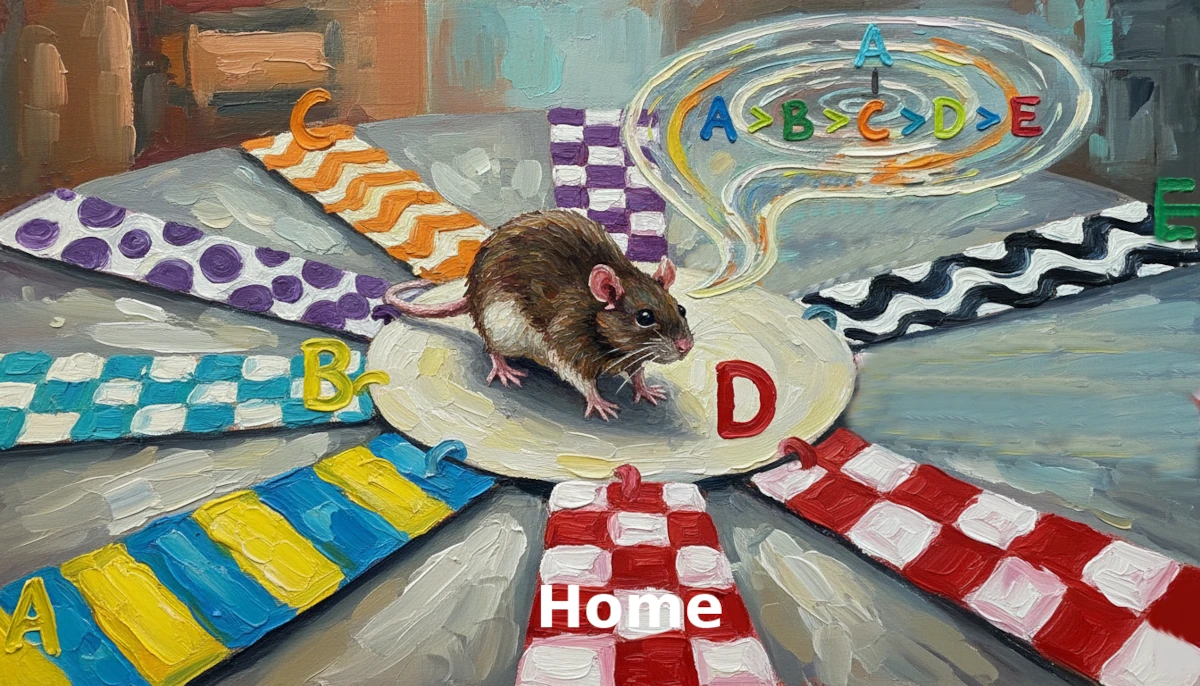
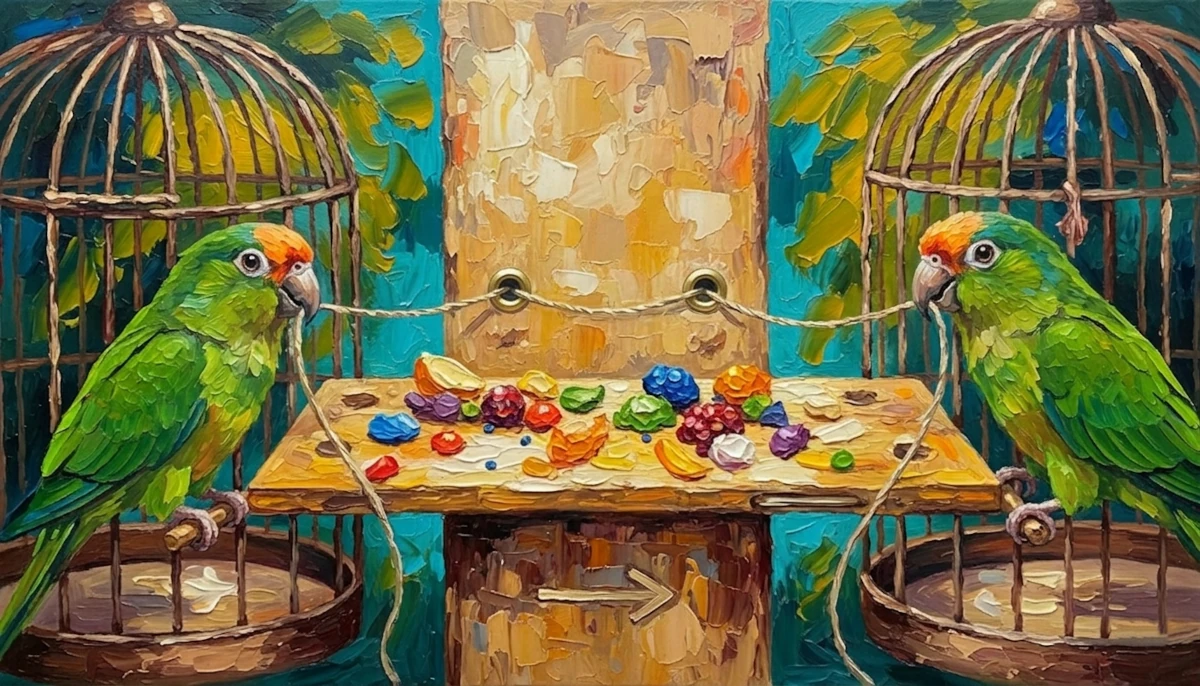
The logic is straightforward. If two ducks are found in the same trap on the same night, they were probably traveling together. If those same two ducks keep turning up together across many trap events over many months, that’s not a coincidence. They’re spending time together by choice. They’re associates – maybe even friends, in the way that matters biologically.
By running the data through a technique called social network analysis, scientists were able to build a picture of the koloa’s social landscape. Each bird became a node in the network, and lines connecting nodes represented associations, with thicker lines indicating stronger, more frequent pairings. The resulting maps showed something clear: koloa are not social generalists who mingle indiscriminately. They form specific, persistent bonds.
But the researchers didn’t just accept this at face value. To make sure the associations they were seeing were real and not just the result of birds randomly using the same patches of habitat, they ran a statistical test called a permutation analysis. They essentially shuffled the trap data 20,000 times to simulate what random chance would look like, then compared that to the real data. The real koloa network showed far stronger and more consistent bonds than any of the randomized versions. The friendships were genuine.
Who Bonds with Whom – and Why
The patterns that emerged from the network analysis were revealing, and in some cases, genuinely surprising.
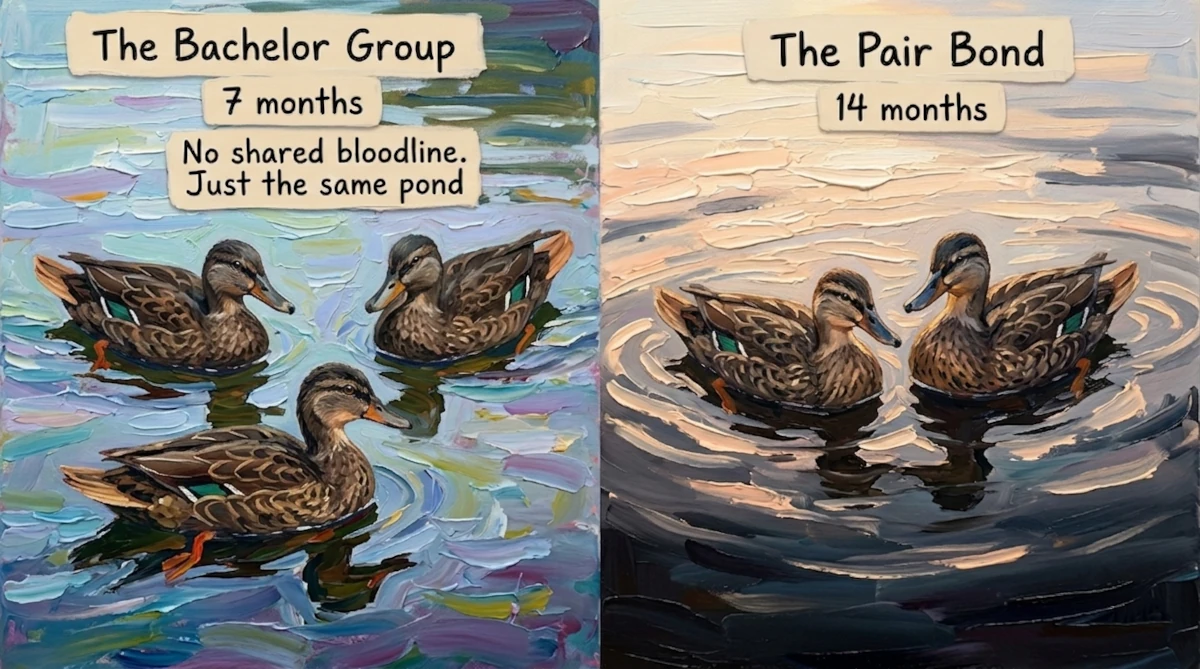
Male-male pairs showed strong, persistent associations that held together for roughly seven months – about the length of a season. These were likely the koloa equivalent of bachelor groups: males who had not formed pair bonds spending time foraging and loafing together, presumably gaining benefits like extra eyes scanning for predators and better chances of finding food.
Male-female pairs showed the strongest bonds of all, persisting for up to 14 months. This strongly suggests that koloa form long-term pair bonds, similar to what has been observed in other island-dwelling ducks like the closely related Laysan duck. On many mainland duck species, pairs form only for a single breeding season before males disperse. The koloa apparently maintains something closer to a long-term partnership.
Female-female associations, interestingly, didn’t show a statistically clear pattern. The researchers suspect this may simply reflect smaller sample sizes – there are fewer females in the population due to a pronounced male-biased sex ratio – and the fact that nesting females go into a kind of social isolation during incubation, making it hard for female bonds to develop or persist the way male ones do.
What the researchers found next was even more important: when they dug into why these bonds formed, nearly everything they tested came up empty.
Did koloa prefer to associate with birds that looked more like mallards – say, males with greenish heads or unmarked chests? No. Statistical analysis showed zero correlation between a bird’s mallard-like plumage score and how strongly it bonded with others.
Did heavier, presumably more dominant birds attract more social partners? No. Body mass had no bearing on how well-connected a bird was in the social network.
Did birds tend to associate with their relatives? No. When the researchers cross-referenced the social network data with genetic analysis, they found that koloa were just as likely to bond with an unrelated stranger as with a sibling or cousin.
So what does drive koloa social bonds? The data points to familiarity and shared experience – birds that have repeatedly encountered each other in the same ponds and co-existed without conflict seem to maintain those relationships over time. It’s a pattern driven by individual recognition and accumulated social history rather than by physical attractiveness or kinship.
The Mallard Problem – and a Surprising Defense
The finding about plumage is particularly significant when you understand the hybridization threat.
Feral mallards have already destroyed pure koloa populations on O’ahu, Maui, and other islands by repeatedly breeding with the native ducks over generations. The concern has always been that, if koloa show any social preference for mallard-like traits – perhaps finding the bolder plumage or larger body size attractive – the hybridization process would accelerate, with mallard features spreading more quickly through the population.
The new research suggests the opposite is happening. Koloa appear completely indifferent to mallard-like appearance when choosing social partners. They don’t gravitate toward greener-headed males or avoid them. Plumage is simply not part of their social calculus.
This behavioral indifference, combined with the fact that there are plenty of koloa males on Kaua’i for females to pair with, seems to be acting as a natural brake on hybridization. When females have abundant same-species partners available and aren’t drawn to mallard features, they have little reason to pair with feral mallards. The koloa’s social preferences – or rather, its lack of specific phenotypic preferences – is functioning as an accidental shield against genetic erosion.
Inside the Refuge: Genes Spread Everywhere
While the social network analysis mapped who spends time with whom, a parallel genetic analysis mapped how those relationships play out across the landscape – with important implications for disease.
Using data from more than 1,500 genetic markers spread across the genome, researchers examined whether related birds tended to live close together within Hanalei NWR. In many species, relatives do cluster together spatially, a pattern called microgeographic genetic structure. Mothers and daughters nest near each other; brothers roost together. This makes intuitive sense, but it also creates a dangerous vulnerability: if disease strikes a particular spot, it can wipe out an entire family line.
At Hanalei NWR, no such clustering exists. Across the full range of distances within the refuge – from just a few meters to more than a kilometer – genetic relatedness between individuals showed no relationship to how close together they were caught. Relatives were scattered randomly throughout the wetlands.
This turns out to be connected to a surprising finding about movement: the koloa at Hanalei are not stay-at-home birds. About 73% of males and 71% of females moved between different wetland units within the refuge during the study period. Both sexes move equally freely, with no tendency for one sex to stay put while the other wanders. This constant shuffling and mixing means that, by the time you catch a group of ducks in a single trap, they’ve been drawn together not because they’re family, but because they share the same social bonds and happen to be using the same patch of water that night.
The genetic result is a refuge-wide mixing bowl, where any local area contains a cross-section of the whole population’s genetic diversity rather than a concentration of one lineage.
Why Botulism Can’t Erase a Lineage
This matters enormously for the botulism threat.
Type C avian botulism is caused by a toxin produced by the bacterium Clostridium botulinum, which thrives in the warm, oxygen-poor conditions found in the mucky bottoms of tropical wetlands. In the Hawaiian wetlands, the disease spreads through a particularly cruel cycle: a dead animal provides a breeding ground for the bacteria; flies lay eggs in the carcass; maggots feed on the contaminated tissue and concentrate the toxin in their bodies; ducks, seeking high-protein food, eat the maggots; the toxin causes paralysis and death; and the cycle begins again with the duck’s own body.
Outbreaks at Hanalei tend to be localized – concentrated in a particular wetland unit, a particular corner of the refuge. This is genuinely dangerous because a single outbreak can kill dozens of birds in a small area. But because relatives are scattered throughout the refuge rather than clustered together, a localized die-off in one wetland pond kills a genetically random sample of the population. It removes ducks, but it doesn’t remove specific family lines. The genetic contribution of any individual lineage is preserved elsewhere in the refuge, in other ducks paddling through other ponds, unaware of the disaster unfolding around a bend.
The same logic applies to diseases spread by social contact, like avian influenza. If close associates were mostly relatives, a socially transmitted disease would sweep through family groups, preferentially removing certain lineages. But because koloa bonds are based on familiarity rather than kinship, the social groups through which diseases travel are genetically diverse. No particular family line is at disproportionate risk.
Two Refuges, Two Gene Pools
While the within-refuge picture is reassuring, the researchers found something sobering when they compared Hanalei to Hulē’ia.
The two refuges are separated by only 31 kilometers – a short flight for a duck. Koloa have been observed moving between them. Yet genetic analysis revealed a striking level of differentiation between the two populations.
The clearest signal came from mitochondrial DNA, which is inherited only through the maternal line and accumulates differences across generations. At Hanalei, the vast majority of birds carried one particular mitochondrial variant, called Haplotype 1 (or J-type). At Hulē’ia, the majority carried a different variant, Haplotype 2 (or N-type). These two variants represent genuinely distinct maternal lineages – different branches of koloa ancestry that have been maintained separately at the two sites.
When the researchers looked for closely related individuals between the two refuges – cousins or closer – they found none. Zero. Despite being relatively strong fliers living on a small island, the koloa at Hanalei and Hulē’ia have been living essentially separate lives for long enough that they no longer share recent ancestry.
This is the evolutionary consequence of the “island syndrome.” Koloa, having evolved in the absence of the pressures that make mainland ducks migratory and wide-ranging, became deeply site-faithful. They move freely within a refuge but rarely leave it. What looks to a human observer like a short hop across the island represents, to a koloa, the boundary of its world.
The management implication is stark: if either refuge were to suffer a catastrophic event – a prolonged disease outbreak, a severe drought, the loss of critical habitat – natural recovery through immigration from the other site would be extremely slow, if it happened at all. The two populations are genetically distinct assets that cannot easily substitute for each other.
What This Means for Moving Ducks
One of the most pressing practical applications of this research concerns translocation – the deliberate movement of animals from one place to another to establish new populations or reinforce struggling ones.
Translocation is a common tool in endangered species recovery, but it often fails. Animals released into unfamiliar territory without their established social companions can become disoriented, fail to integrate with resident populations, and suffer elevated mortality from the stress of dislocation. For highly social species, the disruption of existing bonds can be devastating.
The koloa research offers a clear protocol for doing it better. Because the researchers now know that birds caught together in the same trap are likely genuine social associates – birds that have been spending time together by choice – the recommended approach is to translocate those “trap-mates” as a unit. Don’t break up the groups that already exist; move them together, and they arrive at the new site with their social bonds intact, ready to function as a coherent group rather than a collection of stressed strangers.
Here’s the elegant part: because associates are typically unrelated, following this approach automatically produces a genetically diverse founder population. Conservation managers don’t have to choose between preserving social bonds and preserving genetic variety – in the koloa, those goals align naturally.
For translocations drawing from multiple source sites, the protocol also recommends including birds from both Hanalei and Hulē’ia to capture both major mitochondrial lineages. Given how rarely birds move between these sites on their own, an assisted transfer would be the only practical way to blend both haplotype lineages into a new founding population.
The Bigger Picture: Managing for Social Life
There’s a broader lesson in this research that extends beyond the koloa.
For most of conservation history, the primary tool for assessing a wildlife population has been the headcount. How many individuals are left? Is the number going up or down? These are necessary questions, but they treat all individuals as interchangeable units – as if losing one bird is exactly equivalent to losing another, and as if a population of 500 randomly chosen individuals is the same as a population of 500 birds with intact social networks and genetic diversity.
The koloa research demonstrates why that assumption is wrong, and how much information gets lost when we look only at numbers. A population can look stable in terms of raw count while its social architecture is quietly being dismantled by misguided management, or while a particular genetic lineage silently disappears from a refuge where relatives happened to cluster.
By repurposing existing capture-mark-recapture data – data that was being collected anyway for population monitoring – the researchers were able to reconstruct the social web, map the genetic landscape, identify which threats were and weren’t as dangerous as feared, and produce specific, actionable management recommendations. The cost was analytical effort, not additional disturbance to the birds.
This approach – using standard field data to extract deeper social and genetic insight – is increasingly recognized as one of the more promising directions in conservation biology. It means that refuges like Hanalei, which have been systematically banding and recapturing ducks for years, are sitting on a trove of social history that can now be decoded.
An Island Sentinel
The koloa maoli’s predicament is, in miniature, the predicament of island life in a world shaped by human activity. Islands produce specialists: animals that evolve for a specific, stable environment, that trade wandering instincts for deep local knowledge, that form tight social bonds because the same individuals will share the same ponds for years. These traits made the koloa supremely well-adapted to the original Hawaiian wetland landscape. They make it acutely vulnerable to disruption.
But the same traits that create vulnerability also create opportunity. A species whose members know each other, travel together, and maintain bonds across seasons is a species whose social life can be mapped, understood, and actively protected. The koloa’s relationships are not random noise to be averaged away – they are a structured resource that, if managed carefully, can help carry this species through the existential pressures it faces.
The brown duck paddling through the Hanalei morning mist is not just a number in a population count. It is a node in a social network, a carrier of one of two precious maternal lineages, a familiar companion to two or three other specific birds paddling somewhere nearby. Knowing that – and acting on it – may be what keeps it flying.
Source
Study: Endemic koloa maoli (Hawaiian Duck, Anas wyvilliana) shows preferential social associations, but not based on plumage or genetic relatedness
Authors: P. Keerthipriya, C. P. Malachowski, B. D. Dugger, K. J. Uyehara, A. Engilis Jr., P. Lavretsky, C.P. Wells (2026)
Read the full paper: https://www.biorxiv.org/content/10.64898/2026.01.29.702521v1
Leave a Reply